I was fortunate enough to have been provided a 2.0 BSXinsight (Cycling Version) to test and review. While there is a lot of jargon and text that can be said about what it does and doesn’t do the elevator pitch for the Insight is the following… “it allows you determine accurate aerobic and anaerobic training zones based on lactate threshold and it provides you real time feedback on what is happening inside your muscles via a numeric muscle oxygenation level”. That’s my pitch not theirs but that was how I had to explain it to Becca when she saw me wearing one leg sleeve while on the bike one night. Bottom line is that it “tells you exactly how hard your muscles are working”, that is their pitch.
Why are you worried about Lactate Threshold? Well knowing the correct zones to train in allows you to train effectively and more efficiently. This lets you correctly make your hard sessions hard and your easy sessions easy and avoids the pitfall of your training becoming a middle of the road blur, neither increasing your endurance or your top end speed. Why should I get one? Well, typically a lactate threshold test requires you to have blood samples taken by way of a finger prick and your lactate measured. I actually had this test done in 2012 for Ironman Arizona to determine my HR zones for the bike and run. While not that painful it was certainly inconvenient and expensive to have these tests administered and due to the effort involved they needed to be spread out over several days. As your fitness improves your zones change. You can put out a greater (either duration or intensity) power (in the case of the bike) for less effort. Having the ability to do this at home is a huge leap forward. The Insight uses LED lights mounted in a small pod which slides into a calf sleeve.
The other indicator that the Insight measured was SM02 this is the muscle oxygenation level, this is a good overall indicator of muscle recovery. This is important so you know how soon you can resume high intensity training after the last set. Remember muscles get stronger as a response to breaking them down, refueling them and resting.
So basically these two metrics; Lacatate Threshold and SM02 allow you to determine the correct training zones and tell when you are ready to resume high intensity training.
I had the Insight for two weeks and tried to use it as often as possible. Inside the box you get the leg sleeve that the Insight goes into, it’s very similar to a compression sleeve if anything a bit shorter. The Insight device, a charging dock and USB micro cable.

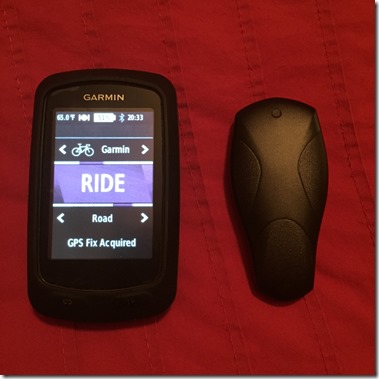
Unboxed contents, next to a Garmin 810 for scale
As instructed by BSX I went online and created a profile to upload the data to. The screen shots below are a mix of my phone and the website. After the unboxing and charging I paired it to my Garmin HR strap and Vector 2 Power Meter pedals. This was completed by way of my phone and was pretty easy to do. We have a lot of Garmin devices in the house and it was important to ensure I had the right things connected. Interestingly the Vectors came up as a Kickr, this was consistent no matter how many times I tried to find Vectors all I could find was Kickr?
Update; the Kickr issue has been resolved by way of adding additional ID to the sensor library, so now Garmin Vectors would be identified.
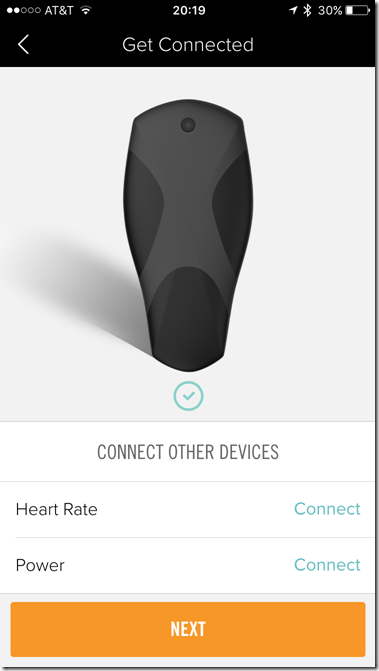

After that the next thing to do was a Lactate Threshold test: The results are below. Basically you follow the prompts on the phone until you fail, from there your zones are calculated for both Power and HR. As you can see there were very similar to the existing zones within Garmin Connect that I had based on my last FTP test and max HR in September. Max HR is a finite number no matter the level of fitness, however it does deteriorate with age. On the bike mine is between 180-185bpm.


Power Zones; BSX left, Garmin right
As you can see the Power Zone were pretty much aligned. Over the next two weeks I wore the Insight as often as possible. On the whole it worked great I had some issues with it having a flat battery and with it syncing on a couple of days and some days two rides turned up on the same day.
That said the data was very much aligned with how the workout went. The worst ride, defined as the poorest recovered and therefore the lowest SM02 was a steady state ride on October 14 this followed a heavy 177 miles over four days comprising;
- 5x20 min sweetspot ride for 2:37 and 50 miles on the trainer
- 5:30 riding a local loop for 83 miles,
- The Sufferfest Elements of Style video and
- 3x9 minutes of over/unders at 95/105% FTP
In my training log I noted “Feeling generally fatigued and not a great night’s sleep! SM02 was down to average of 61% vs. 90% from last week and I could really feel the difference. This week is a step back week though so that will help overall. Added extra 15 mins warm up to this and even that was hard work! Blackcap is 3x9-minute Over-Under intervals alternating between 2 minutes at 95% FTP & 1 minute at 105% FTP with 6-minute recoveries between intervals. The 3 over-unders are sandwiched by slightly longer Endurance intervals.”


So yes the accuracy of the data was replicated in how I felt. The rest of the week was a rest week with very little riding and the following week my SM02 had recovered back into the mid 75% range and allowed me to have a pretty successful FTP test using the new Garmin Vector 2s replacing the Stages crank which I had been using in parallel as my main Power Meter.


FTP Test results; above from BSX’s website, below from Sporttracks
I could go on comparing my training with the results and perceived state of recovery but you get the idea.
One other feature that I wasn’t able to test was the ability to connect it to a Smart Trainer via Bluetooth to control the resistance during a Lactate Threshold test. I used the tried and tested Kurt Kinetic Road Machine for my test. Since then I have acquired a Tacx Bushido which will, I am sure, take the fun level to an 11…on a scale of 1-5 for a test!
Overall I think this is a fascinating tool. I was always a fan of Lactate Threshold testing and now I have the ability to do it in the comfort of my own home, well, on the bike, in the garage, while riding really hard, ok you can ignore the comfort bit…but I can still do it at home. Additionally there is now only a one-time cost for multiple tests. Of course it’s up to the user to utilize the data, there is no point in just wearing and then tucking it away until the next time. You actually have to have a reaction for it to be of any value. The SM02 data really allows you to align the internal status of your body to how you brain feels about it.
The ability to monitor SM02 is a very new field which up until now has only had one other player, Moxy, who have been carving themselves into a nice niche but now there is a new kid in town. Hopefully that will generate more traction of this data point which is good for everyone concerned. Nobody ever ran their fastest 5k without having some competition. BSX have engaged some leading experts in the Power Meter field; Hunter Allen, Stephen Cheung who will hopefully be able to bring to bear the same knowledge, influence and impact that they did on Power Meters. The other traction point that will be needed is integration into already entrenched software platforms where this data can be integrated to, think Strava, Garmin Connect, Sporttracks and Training Peaks to name just a few.
If you have followed BSX you will know that they started through a Kickstarter campaign for the 1.0 device over a year ago. There has been a significant increase in stability and technology and so as to not let the initial funders out in the cold they can upgrade to a 2.0 model for $79.00. New buyers can get the 2.0 “XC” cycling model for $370, the running model “XR” for $300 and the multi-sport model “XM” for $420. The November 2nd rollout of the Gen 2 model also marks the end of the Gen 1 model. It is well worth looking back at their Kickstarter page it’s fascinating to see the stages of development they have been through from prototype to 2.0!
The BSXinsight was provided for two weeks by the good folks at BSX. See previous gear reviews in the tab above. If you have a product you’d like reviewed, contact me at quadrathon@gmail.com.


